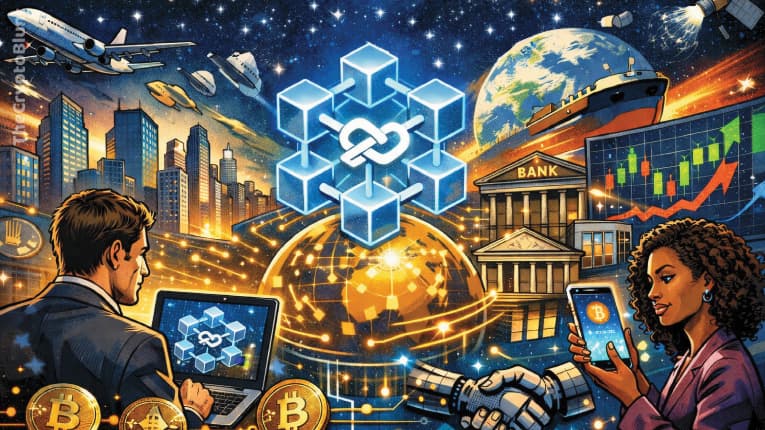
The global financial system is undergoing a structural transformation. What began as an experimental technology powering cryptocurrencies has matured into a foundational layer for modern finance. Next-generation blockchain innovation spanning tokenization, institutional DeFi, stablecoins, and cross-chain infrastructure—is no longer theoretical. It is actively reshaping how capital moves, settles, and scales worldwide.
Below is a deep look at the forces driving this shift, the reasons institutions are paying attention, and the risks that still hang over the sector.
The Core Shift: From Speculation to Infrastructure#
The narrative around blockchain has evolved significantly over the past few years. What was once viewed primarily as a speculative playground is now being evaluated as mission-critical financial infrastructure by major institutions.
Early blockchain narratives focused heavily on retail speculation. Today’s evolution is different. Financial institutions increasingly view blockchain as market infrastructure, not just a new asset class.
For example, major banks and asset managers are launching tokenized funds and on-chain settlement systems, signaling a structural pivot. Tokenization alone is expanding rapidly, with the real-world asset (RWA) market growing from about $8.5 billion in early 2024 to nearly $34 billion by mid-2025.
This reflects a deeper trend: blockchain is becoming embedded in the plumbing of finance. As infrastructure matures, the focus is shifting from hype cycles toward measurable efficiency gains.
Key Reasons Blockchain Is Transforming Finance#
Several structural advantages are pushing blockchain from the edges of finance into the mainstream. These drivers are technological, economic, and regulatory in nature.
Below are the most important forces accelerating adoption across global markets.
1. Tokenization Unlocks Illiquid Markets#
Tokenization converts traditional assets—bonds, real estate, funds—into blockchain-based tokens. This creates three powerful advantages:
- Fractional ownership
- 24/7 global trading
- Programmable settlement
Tokenization can significantly lower administrative costs and accelerate settlement cycles, which is why major financial players are experimenting aggressively.
Why it matters: Markets that were historically slow and exclusive are becoming faster and more accessible. Over time, this could meaningfully expand global investor participation.
2. Institutional DeFi Is Going Mainstream#
The decentralized finance sector is entering a more mature phase. Instead of purely retail-driven experimentation, the focus is shifting toward compliance-friendly, institution-ready infrastructure.
Decentralized finance is evolving from permissionless retail platforms into institution-grade financial rails.
Key signals:
- DeFi total value locked reached roughly $123.6 billion in 2025.
- Institutional participation in permissioned liquidity pools is surging.
- Banks are building internal DeFi desks and hybrid custody models.
The industry is entering what many call “DeFi 2.0”—focused on compliance, sustainability, and real yield rather than pure speculation.
This transition could determine whether DeFi becomes a permanent layer of global finance or remains a niche parallel system.
3. Stablecoins Are Becoming the New Payment Rail#
Among all blockchain innovations, stablecoins may be the most immediately disruptive to traditional finance. Their utility in payments is already visible in cross-border corridors.
Research increasingly suggests they could represent one of the biggest banking shifts in decades, enabling faster global transfers and reducing cross-border friction.
Stay in the loop
Get crypto news before the market moves
Join thousands of investors who read our daily briefing.
No spam. Unsubscribe anytime.
Their advantages include:
- Near-instant settlement
- Lower remittance costs
- Programmable money flows
- Always-on liquidity
As regulation improves, stablecoins are increasingly viewed as the bridge between traditional finance and crypto rails. Their long-term impact will largely depend on how governments choose to regulate fiat-backed digital money.
4. Cross-Chain Interoperability Is Breaking Silos#
Blockchain ecosystems historically developed in isolation, creating fragmented liquidity and user experience challenges. Next-generation interoperability solutions are beginning to solve this structural weakness.
By enabling assets and data to move across networks, cross-chain infrastructure is turning blockchain from competing ecosystems into a connected financial mesh.
This matters because global finance cannot operate efficiently on isolated networks. If interoperability continues improving, it could unlock entirely new categories of multi-chain financial products.
The Up-Side: What Could Go Right#
If current trends continue, next-generation blockchain could deliver meaningful structural improvements to global finance. Many of these benefits focus on speed, cost reduction, and transparency.
- T+0 settlement globally
- Programmable compliance and automated reporting
- Always-open capital markets
- Radically lower cross-border payment costs
- New asset classes and yield products
Some experts already expect high levels of DeFi adoption in the next decade, provided security and regulatory issues continue improving.
The Down-Side: Risks Still in Play#
Despite the strong momentum, the transition to blockchain-based finance is not risk-free. Structural and regulatory challenges remain significant and could slow adoption if not addressed carefully.
Regulatory Uncertainty#
Even supportive regulators warn tokenization introduces new investor risks and legal ambiguities.
Liquidity Gaps#
Many tokenized assets still suffer from thin secondary markets and low trading activity.
Security and Smart Contract Risk#
Institutional adoption depends heavily on audit quality and infrastructure robustness.
Market Fragmentation#
Without strong interoperability standards, liquidity could remain siloed.
These risks do not negate the opportunity, but they do explain why large institutions are moving cautiously rather than all at once.
The Bottom Line#
The direction of travel is becoming clearer with each passing quarter. Blockchain is steadily moving from the periphery of finance toward its core infrastructure layer.
Next-generation blockchain innovation is quietly rebuilding the architecture of global finance. What makes this cycle different from previous crypto waves is the depth of institutional integration and the focus on real financial use cases.
The trajectory is clear: tokenized assets, regulated DeFi, and stablecoin payment rails are converging into a hybrid financial system that blends traditional trust with programmable infrastructure.
The remaining question is not whether blockchain will reshape global finance—it already is. The real uncertainty is how fast the legacy system can adapt to what’s coming next.